Team Headshots at Your Office: How an On-Site Headshot Day Works
Last updated: 28/09/26 · Written by Matthew Burch
If you've been handed the job of "sorting out the team photos", you're probably wondering what you've let yourself in for. How much space does the photographer need? How long will it take? How do you get forty busy people in front of a camera without derailing everyone's day? And how do you make sure the photos actually match when they go up on the website?
I've been running on-site headshot days for companies for over 18 years, from small practices of five people to organisations with 250+ staff. This guide walks you through exactly how it works, what I need from you, and how to make the day painless for everyone.
The quick answer
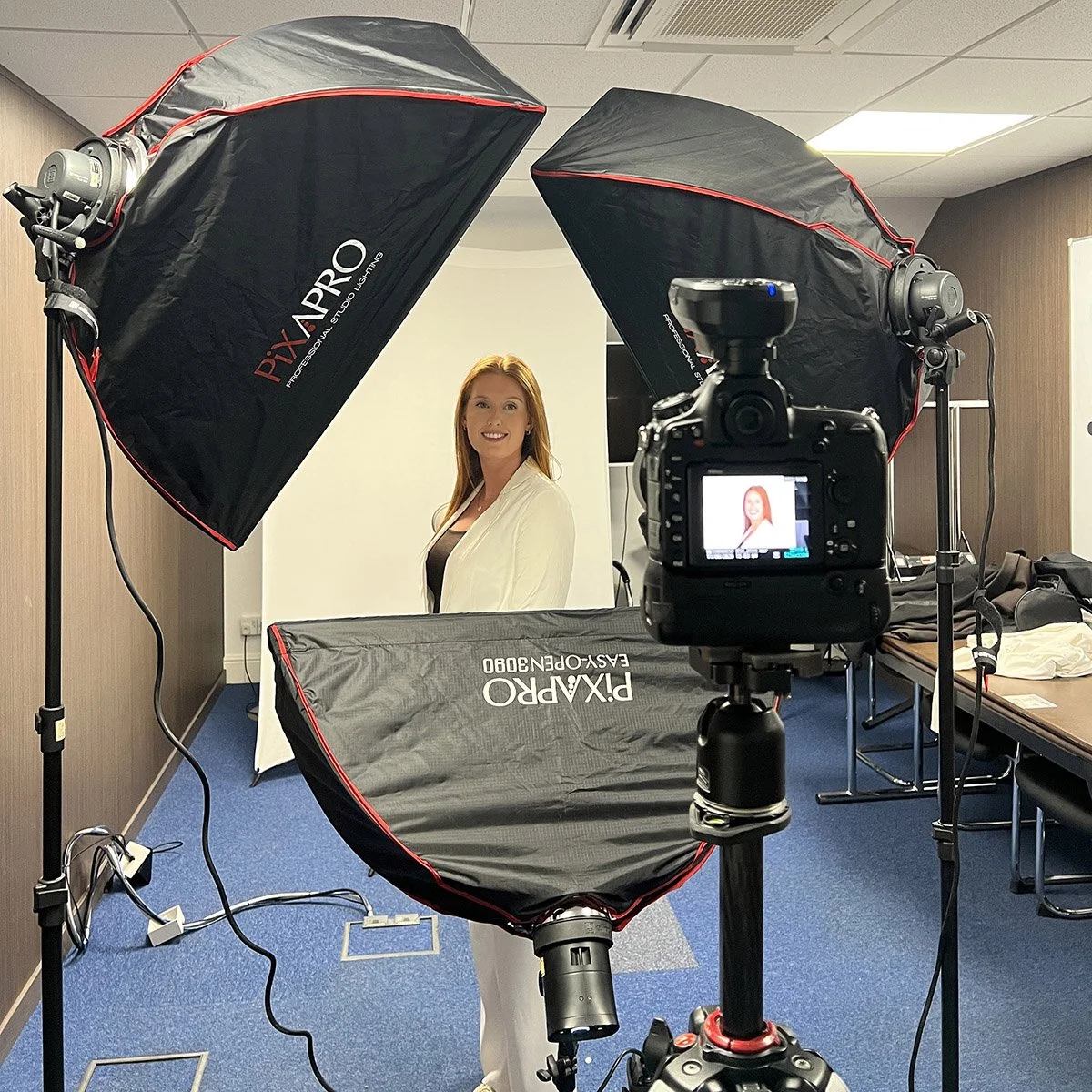
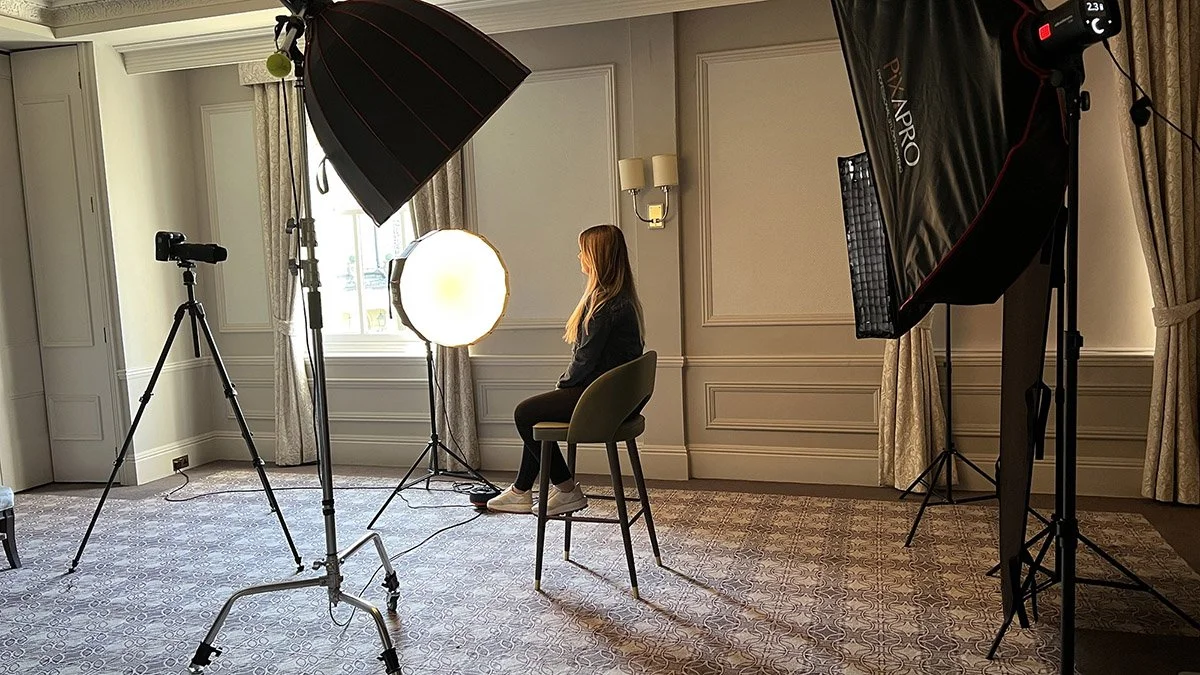
On an on-site team headshot day, the photographer brings a complete portable studio to your office and sets it up in a spare room. Staff come through in short, scheduled slots, usually 10-15 minutes each, so nobody is away from their desk for long. Afterwards, everyone's images are retouched to the same standard and delivered together, ready for your website, LinkedIn and internal systems.
Why have team headshots done at your office?
You could send everyone to a studio. But for most businesses, bringing the photographer to you makes far more sense:
Nobody loses half a day travelling. A few minutes from their desk instead of a round trip across the county or into London.
Every photo matches. Same lighting, same background, same framing, same day. That's what makes a team page look professional instead of patchy.
It's better value. The set-up is done once and shared across the whole team, so the cost per person drops as numbers go up.
It's easier to organise. One date, one room, one schedule, rather than chasing people to book their own sessions.
People are more relaxed. Being photographed in a familiar place, between meetings, feels far less of an event than going to a studio.
How a team headshot day works, step by step
Before the day
1. We agree the brief. We'll talk about where the images will be used, what impression you want your team to give, and the look you're after. Bring examples, whether a competitor's team page you admire or a style from your brand guidelines. We like detailed briefs.
2. Numbers and locations. Tell me roughly how many people, and whether they're in one office or several. An estimate is fine to start with.
3. Choosing the style. Most teams go for one of these:
Plain backgrounds: white, grey, dark or a colour matched to your brand. Clean, consistent and timeless.
Office settings: a softly blurred background from your own workspace, which feels warmer and more modern.
A mix: a clean headshot for directories and LinkedIn, plus a relaxed shot in your space for the website.
4. The schedule. I'll help you plan a timetable of slots. I like to aim for 10-15 minutes per person. If Directors and partners need bios, press images, or several looks need longer sessions, we can schedule these into the day.
5. A note for your staff. I'll can send you a short guide to share with the team covering what to wear, what to avoid, and what to expect. It stops the "what do I wear?" emails landing on your desk.
On the day
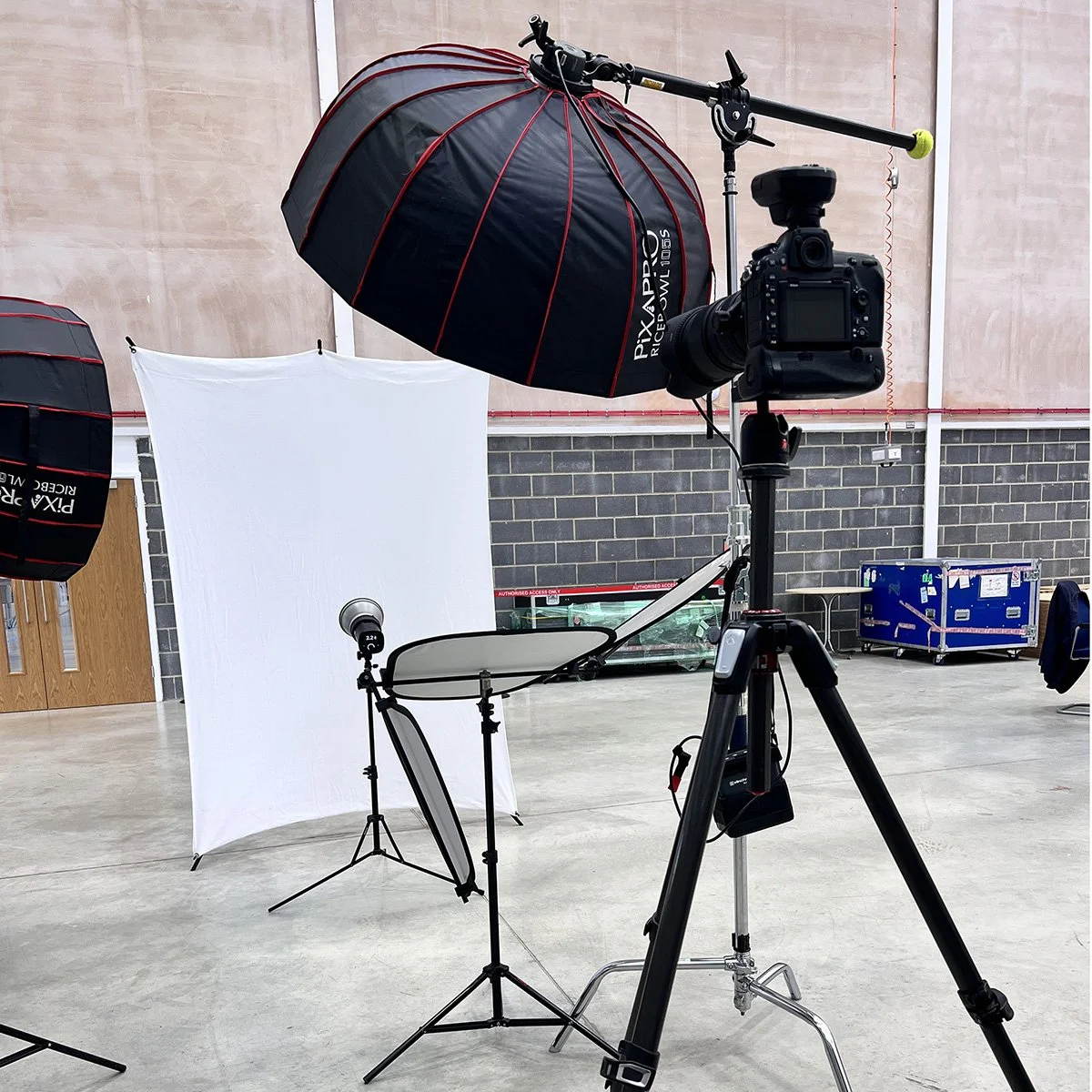
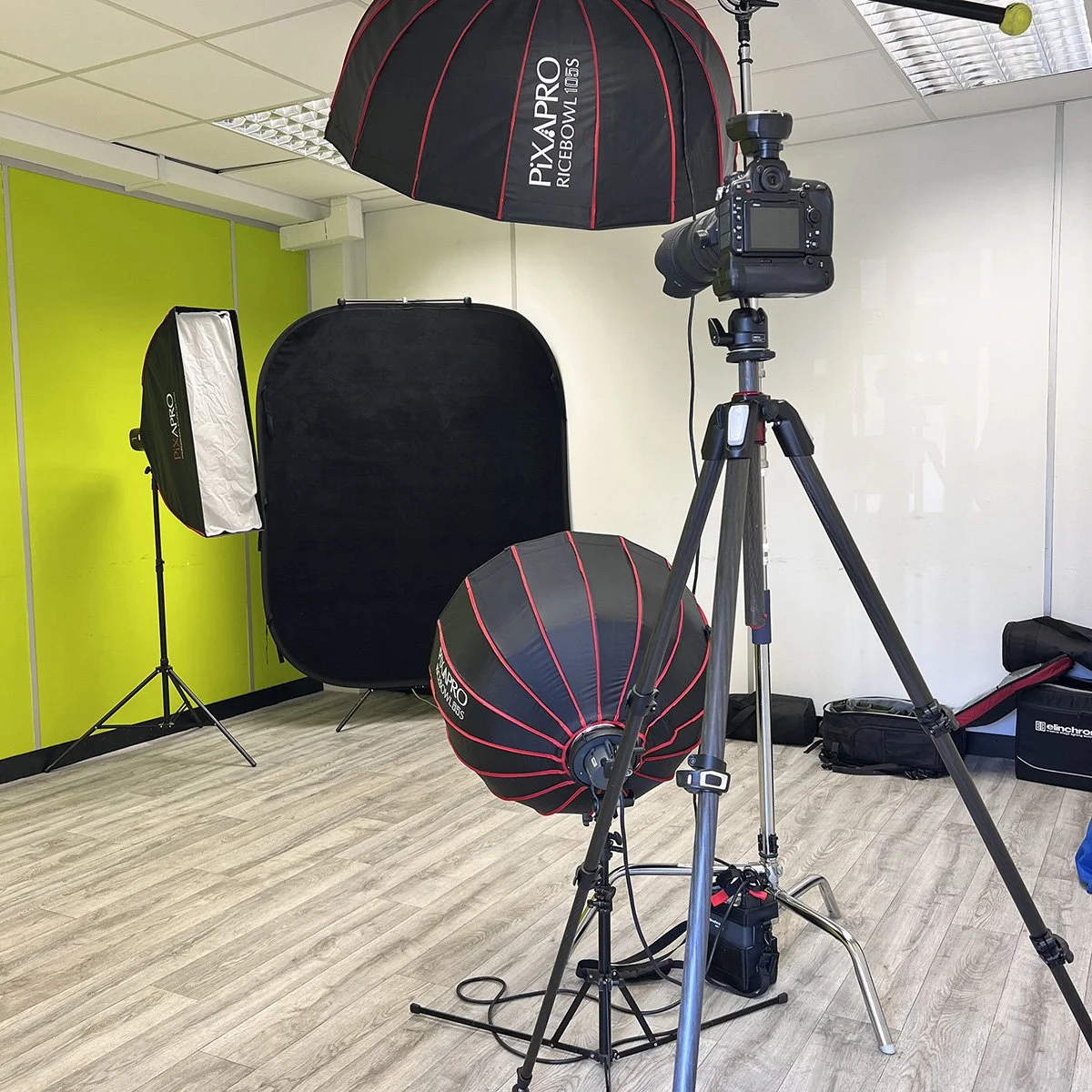
6. I arrive and set up. I usually like an hour before we start shooting to familiarise myself with your location and set everything up. The room becomes a small studio with lights, background and camera.
7. People come through in their slots. Each person gets a relaxed few minutes of direction and conversation. Nobody needs to know how to pose. I guide everyone through it, and plenty of them arrive saying they hate having their photo taken.
8. We keep things moving. Running late happens. Someone's stuck on a call, someone's forgotten. I build a little breathing room into the schedule so the day keeps flowing and stragglers can be fitted in.
9. I pack down. The room goes back to how I found it.
After the day
10. Image selection. After the shoot day, I dive into the culling and selection process, then move to final selections.
11. Retouching. Every final image is retouched to the same natural standard, so the whole set looks like it belongs together.
12. Delivery. Files are named by person and supplied as high-resolution .jpg files. If you need images scaled specifically, I can do this for you; generally though I leave that to your web design and marketing people. They know their requirements and they often change with intended use.
What space do I need for team headshots?
Less than most people think, but it helps to know what makes a room work.
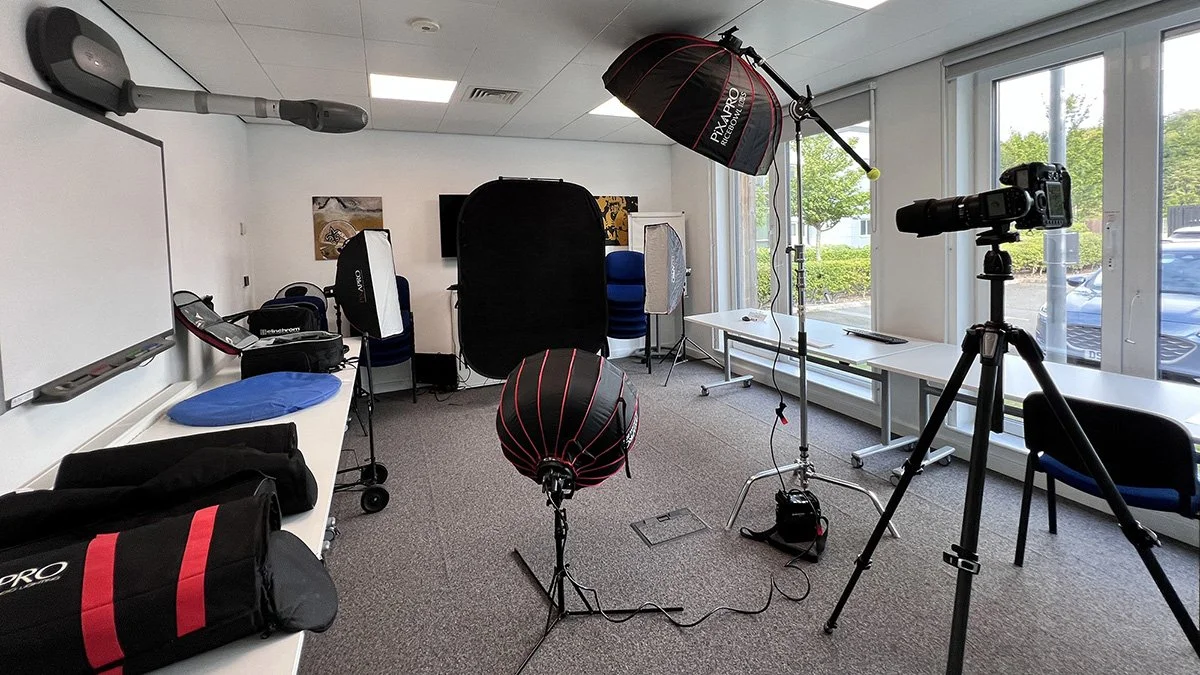
A room to ourselves: a meeting room, spare office or quiet corner that can be closed off. People relax far more when they're not being watched by a queue of colleagues.
Enough depth: the background needs to sit a little way behind the person so the lighting works properly.
Reasonable ceiling height: gives the lights room to work but I can alter the lighting set-up to fit the space.
Power sockets nearby I use battery powered lights, but having power sockets is also useful.
Somewhere for people to check themselves before they come in, even just a mirror in the corridor.
If you're not sure your space will work, send me a few phone photos of the room with rough measurements, and I'll tell you straight away.
How many people can be photographed in a day?
It depends on the style and how much time each person needs, but as a guide:
Standard headshots: 4-6/hr X (say realistically over 6 hours) 6 = 20-36 in a day
Headshots plus office-setting portraits: This depends as a shooting location could use a plain background and then a quick pivot to take in an office background. But if we have to relocate, it may reduce the number over. day.
Senior team sessions: Very variable, and we’d need to talk it through.
For larger organisations, we can spread the work over several days or visit more than one office.
But the above is just a scenario; rejigging the schedule and shoot plan can mean we photograph 70 people in a day!
Tips for whoever is organising the day
A little planning makes a big difference:
Book slots, don't just open the door. A timetable avoids a queue at 10am and an empty room at 3pm.
Avoid the busiest times. Monday mornings, month-end and just before lunch are all harder.
Send a reminder the day before, with the what-to-wear guide attached.
Keep a catch-up slot at the end for anyone who missed theirs.
Put leaders in early. When senior people go through first and enjoy it, everyone else follows.
Plan for absentees. Someone will be off sick or on holiday. That's fine; see new starters below.
Keeping team headshots consistent across offices.
Getting a great set of photos on the day is only half the job. The real test comes six months later, when three new people have joined and their photos need to sit alongside everyone else's.
This is where many team pages fall apart. New starters send in a holiday photo, or get snapped against the kitchen wall on a phone, and the page slowly stops looking like one company.
When I photograph your team, I keep a detailed record of the set-up: lighting positions, background, camera settings, framing and retouching style. That means:
New starters match. They can be photographed weeks, months or even years later and still sit seamlessly alongside the originals.
Different offices match. Your Farnham, Guildford, Farnborough, Basingstoke, Bracknell and London team look like they work for the same company.
New Starters. Revisits to pick up the new starters can be booked. If you have regular new starters, I can offer retainer packages so you know I am coming back again and again, ensuring your staff profile brand is always up to date.
What about the leadership team?
Directors, partners and senior leaders often need more than a standard headshot: images for press releases, speaker profiles, annual reports or the "meet the board" page. It's easy to add a longer session for them on the same day, whether that's a couple of different looks, a more relaxed portrait around the office, or a group shot of the leadership team together.

Frequently asked questions
How long does each person need for a team headshot?
4-6/hr X (say realistically over 6 hours) 6 = 20-36 in a day. Senior leaders who need a wider range of images usually have longer sessions.
Will the headshot day disrupt our office?
Very little. I take over one room, and each person is away from their desk for just 10-15 minutes.
Can you photograph teams at more than one office?
Yes. I photograph teams across Surrey, Hampshire, Berkshire and London plus the wider UK, and use the same set-up at every location so all the photos match.
Do staff get to choose their photo?
They can. It’s up to you or your manager. I send you a password protected online gallery with all the photos displayed and ready for download. You can make the choices, download all the photos or allow people to access the gallery and choose their favourites.
How much do team headshots cost?
It depends on the number of people, locations and the style you choose. The cost per person falls as the team gets bigger. Ask for a quote, click the button below.
How far in advance should we book?
I shouldn’t say this, but I have done a job of 25 people the day after the enquiry. Next day service! But that is not usually possible. For me it’s just about seeing if the day is available in my diary. Looking at it from your point of view, though, I would give your team at least two weeks' notice. Some people may want to get their hair done.
Ready to plan your team headshot day?
Whether you've got five people or 250, I'll help you plan the day, make it easy for your staff, and deliver a set of headshots that look like one team.
To get an accurate quote, tell me:
Roughly how many people
Where you're based (and how many offices)
The style you like
Any deadlines, such as a website launch
Get your team headshot quote :
About the author
Matthew Burch is a headshot and portrait photographer based near Farnham, Surrey, with over 18 years' experience photographing corporate teams, business owners and individuals across Surrey, Hampshire, Berkshire, London and the UK.