Real Photos, Real Business: Why Authentic Company Images Actually Matter
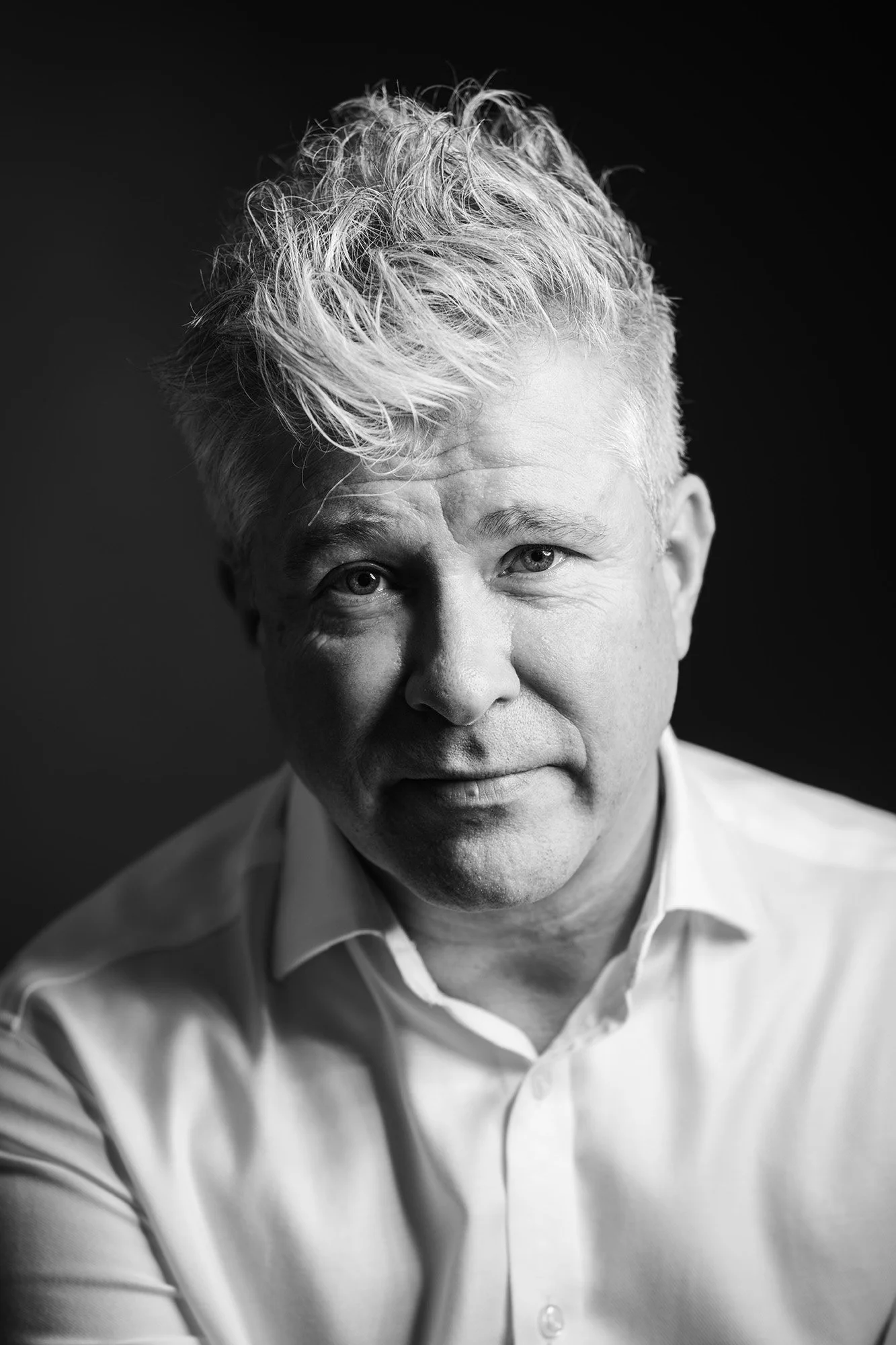
A genuine photo I shot last year for actor Graham McGrath. Not AI creation, no AI fiddles. Also, a very solid, authentic business headshot with Rembrandt lighting .
We've all landed on a company website and immediately clocked that the smiling team photo is stock. You know the one, three suspiciously attractive people in business casual, gathered around a laptop that nobody's actually looking at, laughing at something that clearly isn't funny. It's the visual equivalent of a firm handshake from someone who isn't really pleased to meet you.
However, businesses keep doing it. Stock images and now AI-generated headshots and photos are popping up as normal. I understand, professional photography costs money and takes time, but the calculation people are making when they go down that route is quietly costing them more than they realise.
The thing about authenticity is that people feel it before they can name it. When a potential client lands on your website, they're not consciously running a checklist. They're forming an impression in seconds, and a huge part of that impression comes from whether the images feel real. Stock photos don't feel real. They feel borrowed. And borrowed credibility isn't very credible at all.
AI images are doing something even stranger. On a technical level, the good ones are extraordinary, skin that's impossibly smooth, lighting that never quite existed, faces that are somehow both perfect and slightly wrong. But that wrongness is the problem, and we are developing an almost instinctive sensitivity to AI imagery. We can't always put our finger on what's off, but something registers. In professions built on trust: law, finance, healthcare, consulting, that subconscious flicker of doubt is the last thing you want associated with your brand.
And when the tech gets so good that you really can’t tell the difference, even unconsciously, then we have a very real problem.
Authentic company photography puts real people back into the room. When someone sees an actual photo of the actual person they're about to email, something relaxes. There's a warmth to it. A signal that you're not hiding behind a brand front, that real humans are doing the work. That matters enormously for smaller businesses and sole traders, especially where the person is the brand.
There's also the competitive angle. A lot of your competitors are still using stock, and some are experimenting with AI headshots. Which means the bar for standing out with genuine, well shot photography is lower than it's ever been. Turning up with real images, images that actually look like you and your team, taken somewhere that reflects what you do, is a differentiator that requires a little effort to execute but makes a disproportionate impression.
Before anyone brings up cost, it's worth considering that a professional shoot produces images you’ll use across your website, LinkedIn, proposals, press coverage, and speaking bios. Spread that cost over two or three years of use, and it’s less per day than your coffee habit.
The cultural timing matters too. We're in a time where audiences, particularly younger ones, are increasingly allergic to anything that feels manufactured. The aesthetic that's winning right now across every sector is imperfect, human, and real. Grain over gloss. Honesty over polish. A photo of your actual office, even if the desk behind you is slightly cluttered, tells a more convincing story than a render of what an office is supposed to look like.
None of this is to say that professional photography means casual or low quality. It means intentional. A good photographer isn't just pointing a camera at you, they're making decisions about light, framing, and expression that communicate something specific about who you are and what you do. That level of craft simply cannot be replicated by a stock library or a generative model, because both of those are producing images of no one in particular.
Your clients want to know who they're working with. Show them.